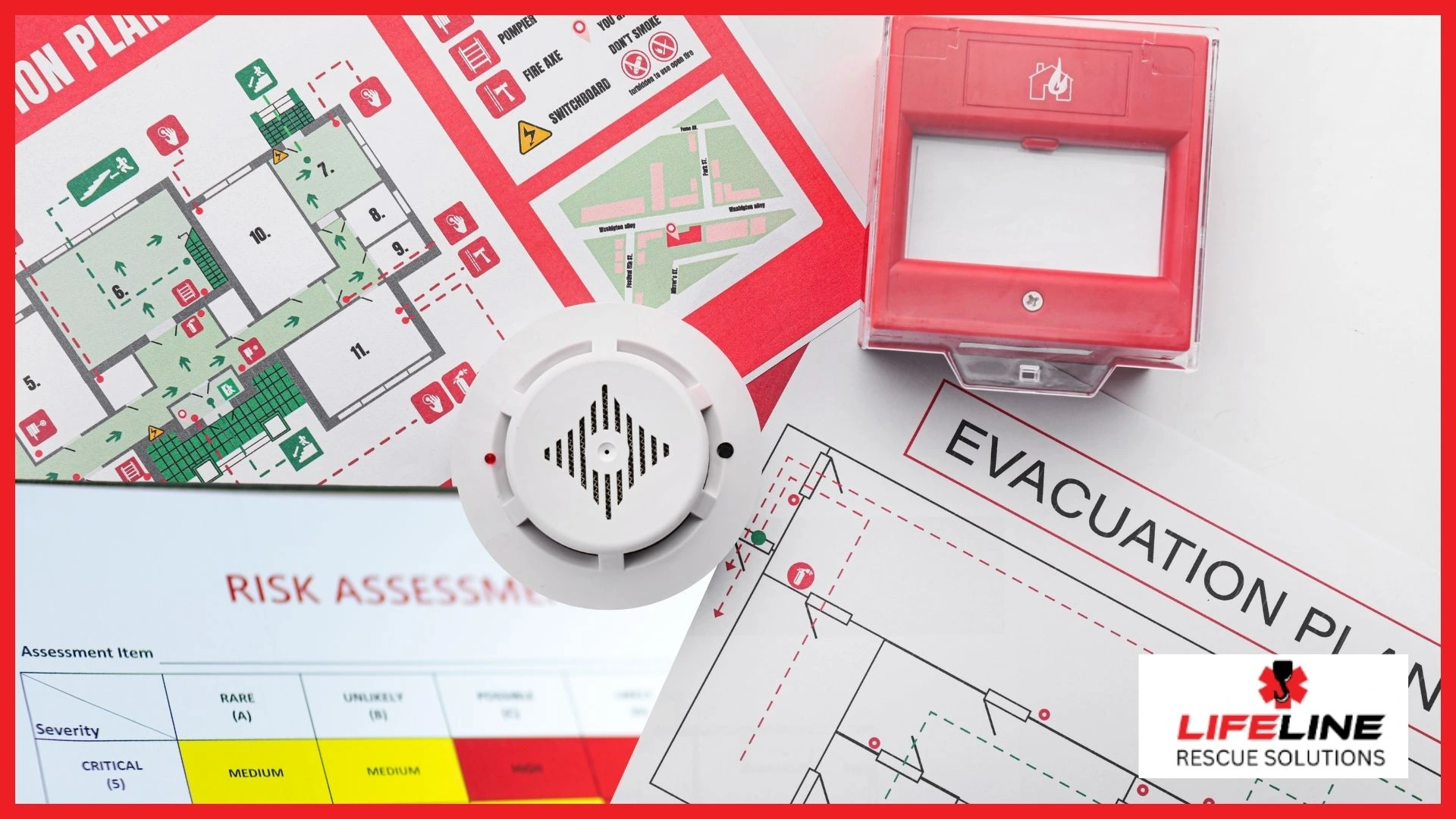
Most UK business owners eventually ask the same question: Do we legally need a fire prevention plan?
The answer is slightly more nuanced than a simple yes or no. While UK fire safety law does not require every organisation to create a document specifically titled a “fire prevention plan”, all non-domestic premises must still carry out the core tasks that such a plan normally contains.
In other words, even if the law doesn’t mandate the exact label, it certainly requires the substance
What UK Fire Safety Law Requires
In England and Wales, the Regulatory Reform (Fire Safety) Order 2005 applies to almost all non-domestic premises.
Under this legislation, the “responsible person”, generally the employer, building owner, or someone with significant control over the premises, must take reasonable steps to prevent fires and to protect people if a fire does break out.
The Regulatory Reform (Fire Safety) Order 2005 requires the responsible person to:
- Identify fire hazards
- Determine who may be at risk
- Install and maintain suitable fire precautions
- Create an emergency plan
- Provide staff with fire safety information and training
Every business must have a fire risk assessment and a clear emergency plan, and businesses with five or more employees must keep written records.
Scotland and Northern Ireland
Although the legislation differs, the expectations are essentially the same across the UK.
In Scotland, the Fire (Scotland) Act 2005 requires those in control of premises to carry out fire risk assessments and take reasonable precautions. Northern Ireland uses the Fire and Rescue Services Order 2006 and the Fire Safety Regulations 2010, which require similar assessments, precautions and maintenance of firefighting equipment and escape routes.
A business operating in the UK faces broadly the same responsibilities.
What is a “fire prevention plan”?
A fire prevention plan is a useful way to combine key documents into one clear, accessible file. It typically includes your fire risk assessment findings, your day-to-day fire-safety procedures, details of fire precautions and your emergency actions.
The term is widely used by businesses and fire-safety suppliers, but it is not a formal legal requirement for most premises. What matters is that the responsible person documents how they will prevent, detect and respond to fire.
A good fire prevention plan includes the findings of the fire risk assessment, the precautions in place, the measures taken to manage fire safety on a day-to-day basis, and the steps to follow in an emergency. If your documents cover these areas, you effectively meet the legal expectations even if the file on your computer doesn’t carry that specific title.
What is Good Compliance?
A compliant business will have an up-to-date fire risk assessment that genuinely reflects how the premises are used.
It will also have a clear emergency plan that staff understand, and it will keep evidence of maintenance on life safety systems such as alarms, extinguishers, fire doors and emergency lighting.
Staff should receive fire-safety training at induction and periodically afterwards, and fire drills should take place regularly.
The most important thing is to review the assessment when anything significant changes like a new machinery, building alterations, new layouts or changes in occupancy, these changes can all alter the level of risk.
How Fire Safety is Enforced
Local fire and rescue authorities carry out inspections and enforce fire safety laws.
If they find deficiencies, they can issue informal advice, formal enforcement notices or, in more serious cases, prohibition notices that restrict the use of the premises. Non-compliance can lead to unlimited fines or prosecution, which is why maintaining accurate and up-to-date documentation is so important.
When Does a Business Need A Professional?
Small, low-risk businesses can often carry out their own fire risk assessments with the help of Government guidance. However, professional support becomes important when premises are complex, large or multi-storey, when you care for vulnerable occupants, or when building works have affected escape routes or fire-safety systems.
A competent fire risk assessor can spot issues that might otherwise be missed and provide a clear, prioritised action plan.
How Lifeline Rescue Solutions Can Assist Your Business
If you’re unsure where your business stands, a specialist fire-safety service can take pressure off your team. fi
We assist UK businesses by conducting fire risk assessments, preparing or updating emergency plans, providing staff training and managing servicing schedules for fire-safety equipment. We can also liaise with local fire and rescue authorities and prepare a clear, concise document that effectively serves as your fire prevention plan.
Conclusion
You may not be legally required to have a document labelled “fire prevention plan”, but you are absolutely required to do the work that such a plan represents.
If your risk assessment is up to date, your emergency plan is clear, and your safety measures are maintained and recorded, then you’re on the right side of the law and protecting the people who rely on your premises.