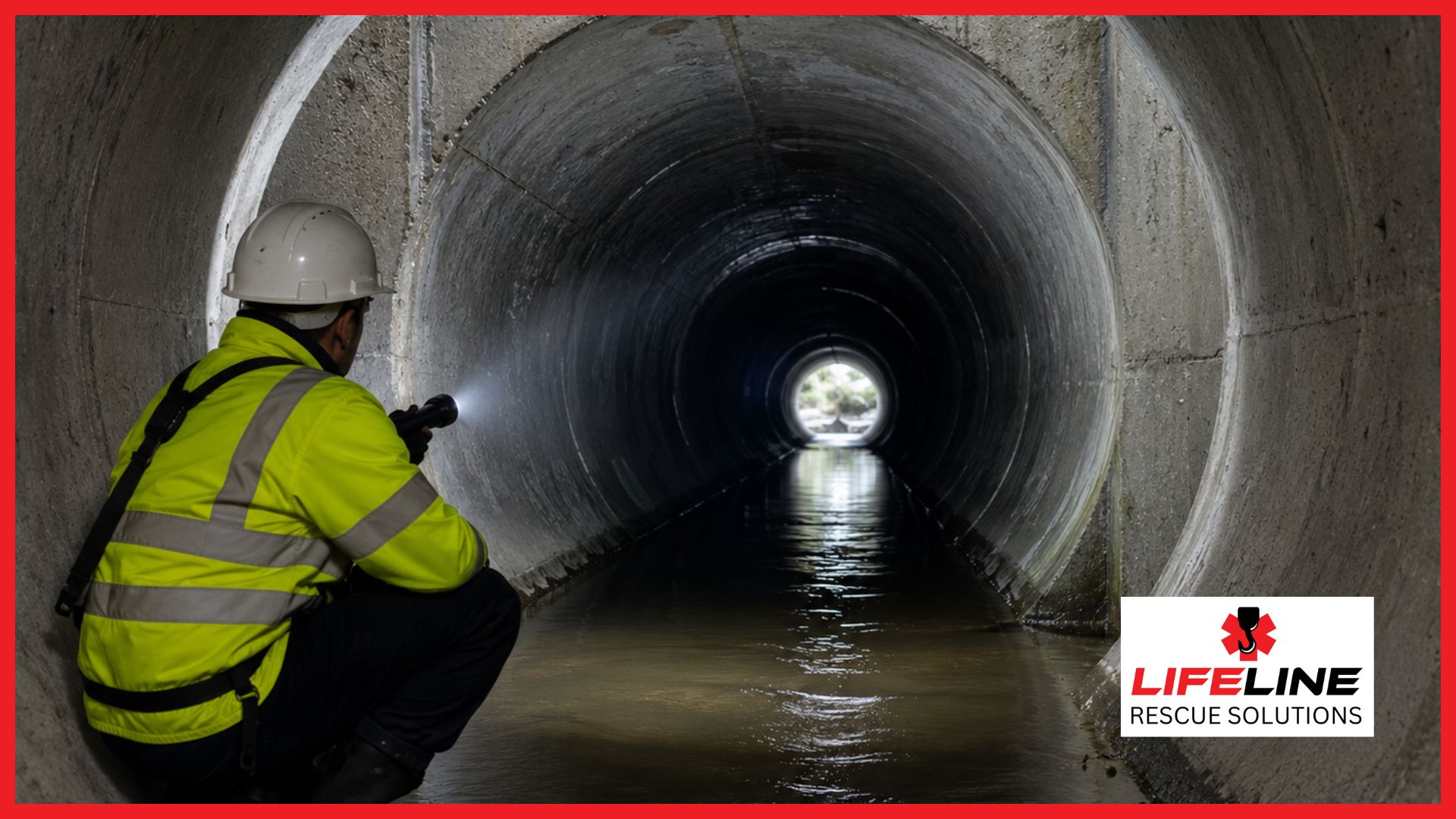
Most confined spaces don’t suddenly become unsafe. Their condition changes gradually over time as concrete begins to crack, steelwork corrodes, groundwater finds its way through joints, or years of loading cause subtle movement within the structure.
For many asset owners, these changes raise an important question: when is a routine inspection no longer enough?
A confined space inspection can identify obvious defects and confirm that an area is safe to enter at the time of the visit. However, when those defects begin to affect the structural integrity of the asset or suggest that deterioration is accelerating a more detailed structural survey may be required.
Knowing when to commission a structural survey can help you identify problems before they become safety risks, avoid unexpected repair costs, and extend the working life of valuable infrastructure.
What Is a Structural Survey?
A structural survey is a detailed engineering assessment of the condition and integrity of a confined space. Rather than simply recording visible defects, it examines how those defects affect the structure’s ability to continue performing safely and reliably.
This type of survey is commonly carried out on:
- Underground chambers
- Pumping stations
- Wet wells
- Culverts
- Service tunnels
- Valve chambers
- Water storage tanks
- Wastewater treatment structures
- Utility vaults
During the survey, experienced engineers assess structural elements such as concrete walls, roofs, floors, steelwork, joints, support beams and foundations. Where necessary, visual inspections may be supported by non-destructive testing, crack monitoring, concrete investigations or corrosion assessments to gain a clearer understanding of the structure’s overall condition.
The outcome is more than just a defect report. It provides practical recommendations that help asset owners decide whether the structure can continue operating safely, requires monitoring, or needs repair.
Why Structural Surveys Are So Important
Underground structures operate in some of the harshest environments found in civil engineering.
Unlike above-ground buildings, confined spaces are continuously exposed to moisture, groundwater pressure, aggressive chemicals, fluctuating temperatures and, in many wastewater assets, corrosive gases such as hydrogen sulphide. Over time, these conditions slowly weaken construction materials.
One of the biggest challenges is that deterioration often develops out of sight. A small crack on the surface may indicate much more significant damage beneath the concrete, while corrosion hidden behind coatings or inside reinforced concrete can continue for years before becoming visible.
By the time structural problems become obvious, repairs are often considerably more expensive and disruptive than if they had been identified earlier.
A structural survey provides the detailed information needed to understand not only what defects are present but why they have occurred and whether they pose a risk to the long-term performance of the asset.
What Does UK Legislation Require?
A common misconception is that UK legislation specifies exactly when structural surveys must be carried out. In reality, there is no fixed legal inspection frequency for confined space structures.
However, employers and asset owners still have clear legal responsibilities.
The Confined Spaces Regulations 1997 require employers to identify and control risks associated with confined space work wherever reasonably practicable. Similarly, the Health and Safety at Work etc. Act 1974 and the Management of Health and Safety at Work Regulations 1999 place duties on organisations to assess risks and ensure workplaces remain safe.
If there is reason to believe that the condition of a confined space could affect the safety of those entering it, commissioning a structural survey may form part of demonstrating that these legal duties have been met.
For organisations responsible for ageing infrastructure, structural surveys are therefore less about complying with a fixed timetable and more about managing risk responsibly.
Signs That Your Confined Space May Need a Structural Survey
No two structures deteriorate in exactly the same way, but there are several warning signs that experienced surveyors treat as indicators that a more detailed assessment may be necessary.
Cracks in Concrete or Masonry
Cracks are among the most common reasons for requesting a structural survey.
It’s important to remember that not every crack indicates structural failure. Hairline shrinkage cracks are relatively common in reinforced concrete and often remain stable for many years.
However, cracks deserve closer investigation when they begin to widen, allow water through the structure, appear in significant numbers or follow patterns associated with structural movement.
During a structural survey, engineers don’t simply record that a crack exists. They assess its width, depth, orientation, location and likely cause before determining whether it is historic, active or potentially affecting structural performance.
Where movement is suspected, crack monitoring may be recommended over several months to establish whether deterioration is continuing.
Corrosion of Steel Components
Corrosion is a major cause of deterioration in confined spaces, particularly within wastewater infrastructure.
In our experience, corrosion frequently develops around roof slabs, access openings and areas where moisture and hydrogen sulphide gases accumulate. Steel ladders, handrails, support brackets and reinforcement hidden within concrete are all vulnerable if protective coatings begin to fail.
As corrosion progresses, steel loses thickness and therefore strength. In reinforced concrete, expanding corrosion products can also crack and displace the surrounding concrete, accelerating further deterioration.
A structural survey helps determine whether corrosion is superficial or whether it has begun to compromise the structural capacity of the asset.
Persistent Water Ingress
Water entering a confined space is often dismissed as a drainage issue, but it can be an early warning sign of more significant structural problems.
Leaks through construction joints, wall cracks or failed seals may indicate movement within the structure or deterioration of waterproofing systems. Persistent moisture also creates the conditions needed for reinforcement corrosion, concrete degradation and chemical attack.
Rather than simply identifying where water is entering, a structural survey investigates why it is occurring and whether it is contributing to wider structural deterioration.
Concrete Deterioration
Although reinforced concrete has an exceptionally long service life, it is not immune to deterioration.
Over many years, exposure to aggressive environments can result in carbonation, sulphate attack, chloride contamination, freeze-thaw damage or reinforcement corrosion. These processes often develop slowly and may not become apparent until concrete begins to crack or spall.
Surveyors look beyond surface appearance to assess whether deterioration is cosmetic or indicative of a deeper structural issue. Depending on the findings, additional investigations such as cover surveys, carbonation testing, rebound hammer testing or concrete core sampling may be recommended.
Early intervention is usually far more cost-effective than allowing deterioration to continue unchecked.
Structural Movement or Settlement
Movement is generally one of the most significant indicators that a detailed structural assessment is required.
Changes in groundwater conditions, nearby excavation works, ageing foundations or poor ground conditions can all contribute to settlement over time.
Warning signs may include uneven floors, distorted walls, displaced pipework, widening joints or recurring cracks that continue to reopen after repair.
One of the key objectives of a structural survey is to establish whether movement has stabilised or whether the structure is continuing to move. That distinction has a significant influence on any repair strategy.
Ageing Infrastructure
Across the UK, many underground assets remain in service long after their original design life.
It is not unusual to inspect chambers, culverts and pumping stations that have been operational for 50 years or more. Some brick-built sewer structures are considerably older.
Age alone does not mean a confined space is unsafe, but older assets are naturally more susceptible to cumulative deterioration. Construction standards, materials and design methods have also changed significantly over the decades.
For this reason, many asset owners adopt condition-based structural surveys as infrastructure ages, even where no major defects have yet been identified.
Changes in Loading or Use
A structure that was adequate when originally constructed may no longer be suitable if its operating conditions have changed.
Examples include installing heavier mechanical equipment, increasing storage capacity, altering hydraulic loads or changes in traffic loading above underground chambers.
Whenever the demands placed on a structure increase, it is good engineering practice to verify that it still has sufficient structural capacity.
Following Flooding or Other Significant Events
Certain events justify a structural survey even if no obvious damage is immediately visible.
These include:
- Major flooding
- Ground instability
- Nearby excavation works
- Vehicle impacts
- Significant pipe failures
- Fire or explosion
- Severe storm damage
Hidden structural defects can continue developing long after the initial event has passed, making early investigation a sensible precaution.
How Often Should a Structural Survey Be Carried Out?
One of the questions we hear most frequently is, “How often should a confined space have a structural survey?”
The honest answer is that there is no universal inspection interval.
Modern asset management increasingly relies on risk-based inspection programmes rather than fixed timescales. A newly constructed valve chamber in a stable environment presents a very different level of risk to an ageing wastewater pumping station showing signs of cracking and corrosion.
When deciding how frequently structural surveys should be undertaken, surveyors typically consider factors such as:
- The age of the asset
- Previous inspection findings
- Existing structural defects
- Environmental conditions
- Operational criticality
- Consequences of structural failure
- History of repairs or recurring problems
Structures that exhibit ongoing deterioration may require regular monitoring, while those remaining in good condition may only need periodic engineering assessments alongside routine inspections.
What Actually Happens During a Professional Structural Survey?
Every confined space presents different challenges, but a comprehensive structural survey typically combines engineering assessment with safe confined space working procedures.
Depending on the structure and its condition, the survey may include detailed visual inspections, defect mapping, crack measurements, corrosion assessments, photographic records, dimensional surveys and non-destructive testing where appropriate.
Importantly, these surveys should only be carried out by competent personnel with experience in both structural engineering and confined space operations. Accessing underground assets introduces additional hazards that require suitable training, risk assessments, safe systems of work and, where necessary, emergency rescue arrangements.
The final survey report should clearly explain:
- The condition of the structure
- The significance of identified defects
- Likely causes of deterioration
- Whether defects should be monitored or repaired
- Recommended remedial works
- Suggested future inspection strategy
For asset owners, this provides a practical roadmap for managing the structure over the coming years rather than simply documenting its current condition.
Why do you Need to Act Early
One of the biggest misconceptions about structural deterioration is that it becomes obvious before it becomes serious.
In reality, many significant defects begin as relatively minor issues. Small cracks allow water to enter, moisture accelerates corrosion, corrosion weakens reinforcement, and eventually the surrounding concrete begins to fail.
Identifying that chain of deterioration early almost always results in simpler, less disruptive and more cost-effective repairs.
Beyond reducing maintenance costs, early structural surveys also help organisations:
- Protect employees and contractors working within confined spaces
- Extend the operational life of valuable infrastructure
- Prioritise maintenance budgets effectively
- Reduce the likelihood of unexpected failures
- Support long-term asset management planning
- Demonstrate a proactive approach to health and safety
Conclusion
Most structural failures do not occur without warning. They are usually the result of deterioration that has developed gradually over many years, often beginning with relatively minor defects such as cracking, corrosion or water ingress.
The challenge is recognising when those defects have progressed beyond the scope of routine inspections.
A professional structural survey provides the engineering evidence needed to understand the true condition of a confined space, identify the underlying causes of deterioration and make informed decisions about repair, monitoring or continued operation.
If your inspections are consistently identifying recurring cracks, persistent leaks, concrete deterioration or signs of structural movement, it is worth seeking specialist advice before those problems become more complex and expensive to resolve.
Taking action at the right time not only protects the structure itself but also helps ensure that everyone entering the confined space can do so safely and with confidence.
Need a Confined Space Structural Survey?
Learn more about our Confined Space Structural Survey service, including what’s included in a survey, the types of structures we inspect and how we help organisations across the UK manage ageing underground infrastructure.
If you’re unsure whether your asset requires a structural survey, our team is always happy to discuss your requirements and provide practical advice.