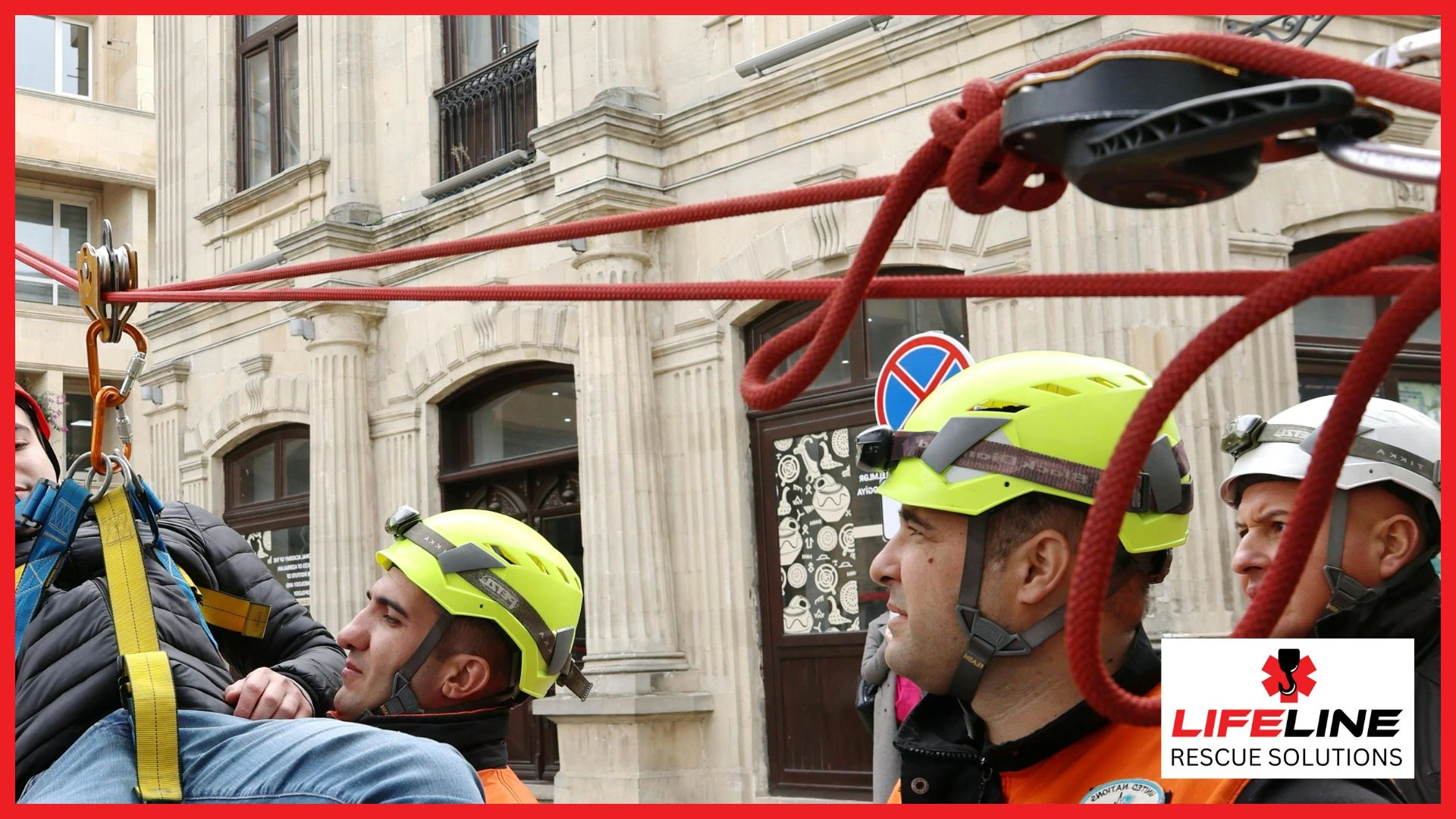
Choosing the right rescue equipment for an industrial site is not a box-ticking exercise. It is a decision that directly affects whether a casualty is recovered quickly and safely or whether a manageable incident escalates into something worse.
After more than a decade working across UK industrial environments, refineries, manufacturing plants, utilities, construction sites, offshore and waste facilities, I can say that the right equipment always starts with the right understanding of risk.
Every industrial site is different. The hazards at a water treatment works bear little resemblance to those in a distribution warehouse or on a construction high-rise. The equipment you select must reflect that reality.
Start With a Proper Risk Assessment
Under the Health and Safety at Work etc. Act 1974 and the Work at Height Regulations 2005, employers are required to assess risks and plan for emergencies. The same applies under the Confined Spaces Regulations 1997.
The key phrase here is plan for emergencies. Too many sites invest heavily in prevention but treat rescue as an afterthought.
When assessing your site, consider the following:
Work at height activities (roofs, MEWPs, towers, gantries)
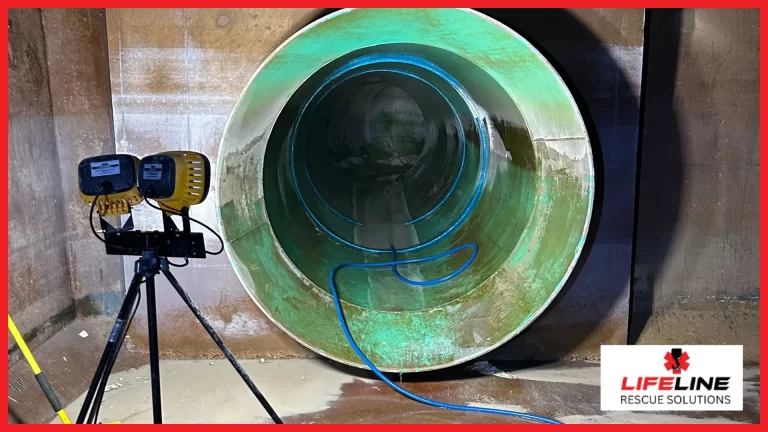
Confined spaces (tanks, silos, sewers, ducts)
Fire and explosion risks
Water hazards (culverts, docks, treatment tanks)
Remote or restricted access areas
Lone working
A structured and compliant fire risk assessment is essential where ignition sources, flammable materials, or complex evacuation routes exist. Without this foundation, equipment selection becomes guesswork.
Work at Height Rescue Equipments
If your site involves fall arrest systems, you must have a rescue solution that can recover a suspended casualty quickly. Suspension intolerance can become life-threatening in a matter of minutes.
At a minimum, consider these equipments:
Pre-rigged rescue kits (haul/lower systems)
Adjustable anchor slings
Edge protection
Inertia reels with integrated rescue winches
Stretcher systems suitable for vertical recovery
Equipment alone is not enough. If your work involves complex access, such as steelwork, towers, or roof structures, you may require a dedicated standby rescue team capable of immediate intervention. This removes reliance on public emergency services and dramatically reduces response time.
Confined Space Rescue Equipment
Confined space rescue is one of the most high-risk environments in industry. The majority of fatalities occur among would-be rescuers.
If you are operating under the Confined Spaces Regulations 1997, your equipment selection must reflect:
Atmospheric monitoring (multi-gas detectors)
Ventilation systems
Tripod or davit arm systems
Man-riding winches
Escape breathing apparatus
Communication systems
Intrinsically safe lighting
You must also decide whether rescue will be:
Self-rescue
Non-entry rescue
Entry rescue by trained personnel
Non-entry rescue (tripod and winch retrieval) is preferable where possible. However, complex vessels often require a dedicated confined space rescue team with breathing apparatus and stretcher capability.
It’s important to emphasize that equipment is only effective when operated by trained personnel. Rescue gear should be deployed solely by individuals who have undergone regular drills and assessments to ensure their competence and readiness. This approach enhances safety and efficiency in emergency situations.
Fire Safety Rescue Equipment
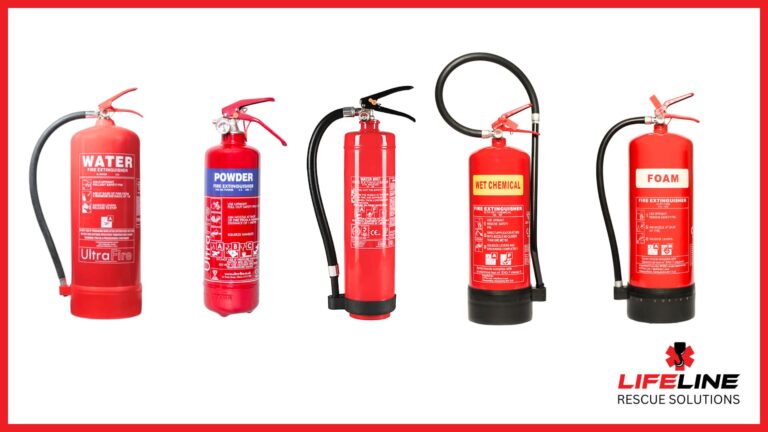
Fire safety equipment on industrial sites typically focuses on prevention and suppression. However, rescue considerations include:
Fire-rated escape hoods
Evacuation chairs for multi-storey facilities
Thermal imaging cameras for search
Fire-resistant stretchers
If your risk assessment identifies the potential for smoke-filled environments, your rescue provision must include respiratory protective equipment suitable for trained responders.
Coordination with your local UK Fire and Rescue Service is advisable, but again, your internal arrangements must stand on their own.
Water Hazards Rescue Equipments
Industrial water risks are frequently underestimated. Treatment plants, dockyards, quarries, and flood-prone infrastructure all require water rescue considerations.
Suitable equipment for this may include:
Throwlines and reach poles
Inflatable rescue paths
Rescue boats (where appropriate)
Personal flotation devices (PFDs)
Dry suits and thermal protection
Swiftwater rescue equipment where flow risk exists
Where moving water is present, rescue equipment must match the classification of the hazard. Still water rescue equipment is not suitable for fast-flow environments.
Having standby water rescue experts can make a significant difference in hazardous water environments.
Considerations for Equipment Purchase
Selecting rescue equipment is not simply a matter of buying the most advanced kit. Even the highest-specification systems can fail if they are unsuitable for the environment or inaccessible when needed.
Industrial sites present unique challenges, confined spaces, chemical exposure, tight access points, and extreme weather conditions, all of which influence how and whether rescue equipment can be deployed effectively.
Before committing to any purchase, it is essential to evaluate not only the technical capabilities of the equipment but also how it will perform in the actual conditions it is expected to operate. Storage, portability, compatibility with existing PPE, and ease of use under high-pressure situations are just as critical as the kit itself.
I have witnessed well-funded sites acquire state-of-the-art equipment that could not physically fit into the confined space it was intended for. Realistic drills and practical testing are the only way to ensure that your rescue plan is genuinely operational.
Training and Competence
Rescue equipment is only as effective as the team using it. The Health and Safety Executive is clear: emergency arrangements must be suitable and sufficient.
This means:
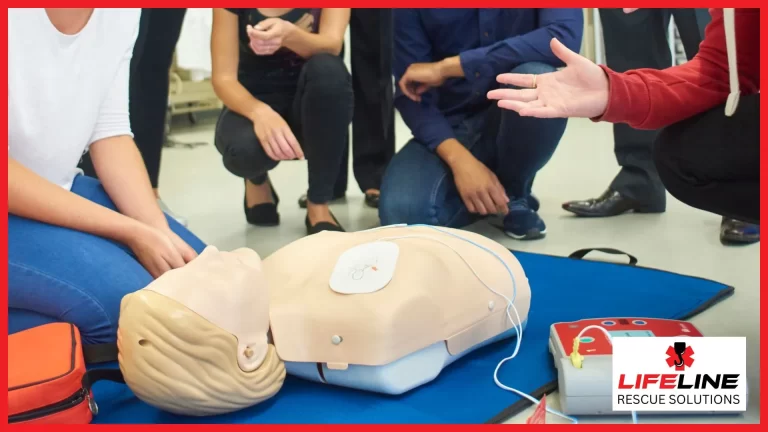
Formal rescue training
Regular scenario-based exercises
Equipment inspection and servicing schedules
Clear written rescue plans
Defined roles and responsibilities
A laminated rescue plan in a folder is not a rescue strategy. Practical rehearsal is essential.
Maintenance, Inspection and Compliance
Rescue equipment falls under PPE and lifting equipment regulations depending on its function. This may bring in requirements under the Lifting Operations and Lifting Equipment Regulations 1998 (LOLER) for inspection and certification.
You should have:
Asset registers
Inspection logs
Defined competent persons
Manufacturer servicing intervals are followed strictly
Neglecting to maintain rescue equipment is both a compliance breach and a moral failure.
Avoid the “One-Size-Fits-All” Approach
Every industrial site must tailor its rescue capability to:
The specific tasks performed
The number of people at risk
The response time of external emergency services
The complexity of access
The worst credible scenario
Engage with experienced rescue professionals who understand UK legislation and operational realities. Generic equipment bundles rarely address site-specific challenges.
Conclusion
Choosing the right rescue equipment for industrial sites is about practicality, speed, and competence. It requires honest risk assessment, realistic planning, and ongoing commitment to training.
In a decade of rescue work, I have seen incidents resolved smoothly because the correct equipment was available and teams were prepared. I have also witnessed avoidable escalation where rescue planning was superficial.
If your rescue plan depends on luck or external response alone, it is not a plan. Industrial rescue is about preparation long before the incident occurs. Get the equipment right, train properly, and review regularly because lives depend on it.